Liturgy
The traditional Roman rite
Sacredness, silence, spiritual depth and timeless beauty — that is what marks the ‘old Mass’. An encounter with God that speaks to heart and senses.
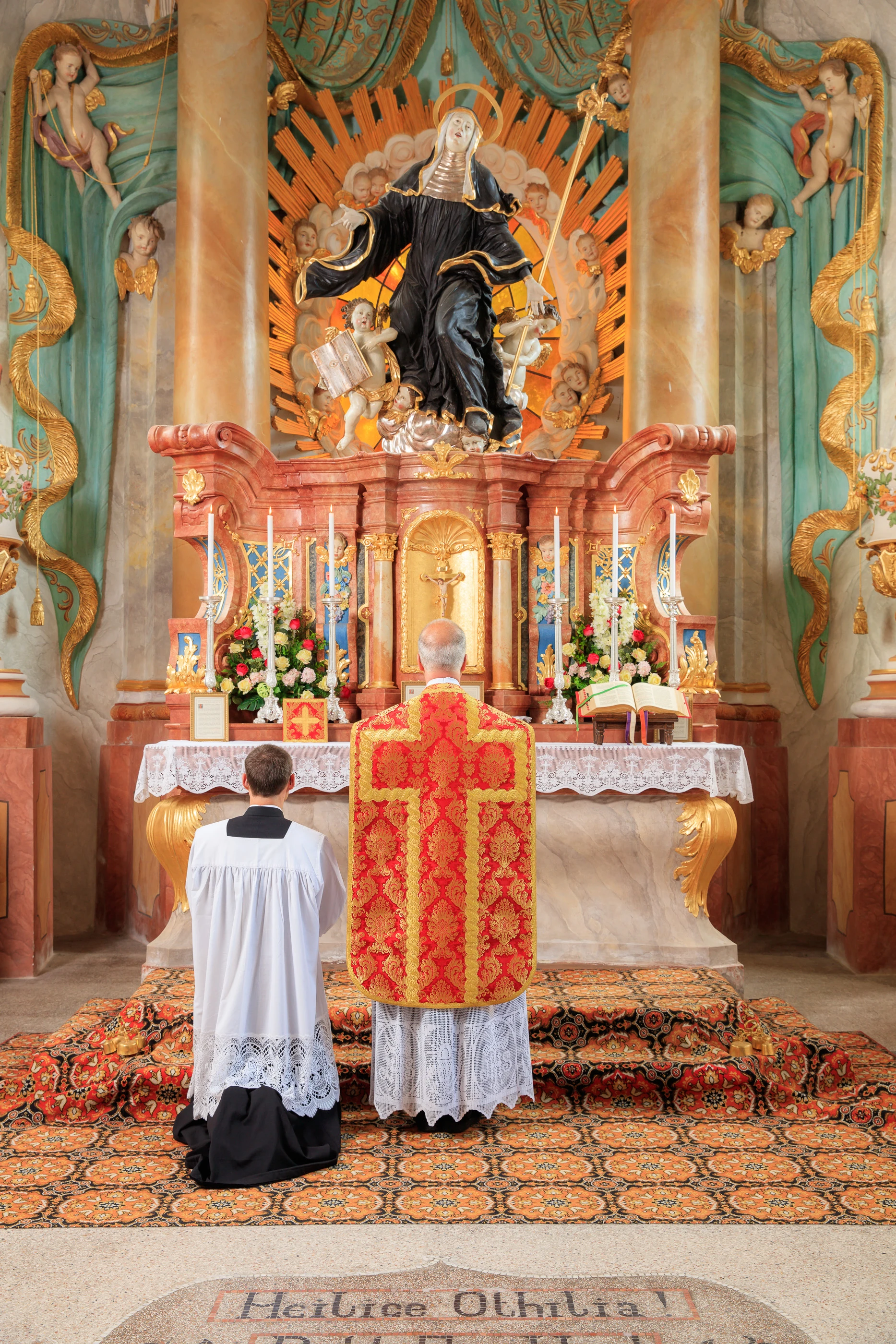
Particularly striking is the deep reverence with which the Blessed Sacrament is treated. The Tridentine rite — under Pope Benedict XVI also called the extraordinary form — is anything but dusty. It is not about nostalgia; quite the opposite: here in Zurich, too, it holds a strong attraction for the young generation in particular.
Many young people are searching for genuine spiritual depth. The traditional rite gives a convincing answer to the longing for the holy and the transcendent in our modern world, and invites us to experience the continuity of the Church at first hand.
In a city like Zurich, the traditional rite also shows its power to unite: the common language of the Church gathers people of the most varied nationalities into one great spiritual family at prayer. At the same time, the community encourages everyone to keep improving their German — not only to follow the sermon, but also to deepen the bonds between us.
First steps
How do you become familiar with the traditional rite?
You become familiar with the traditional rite by watching, listening and reading.
-
 Watch
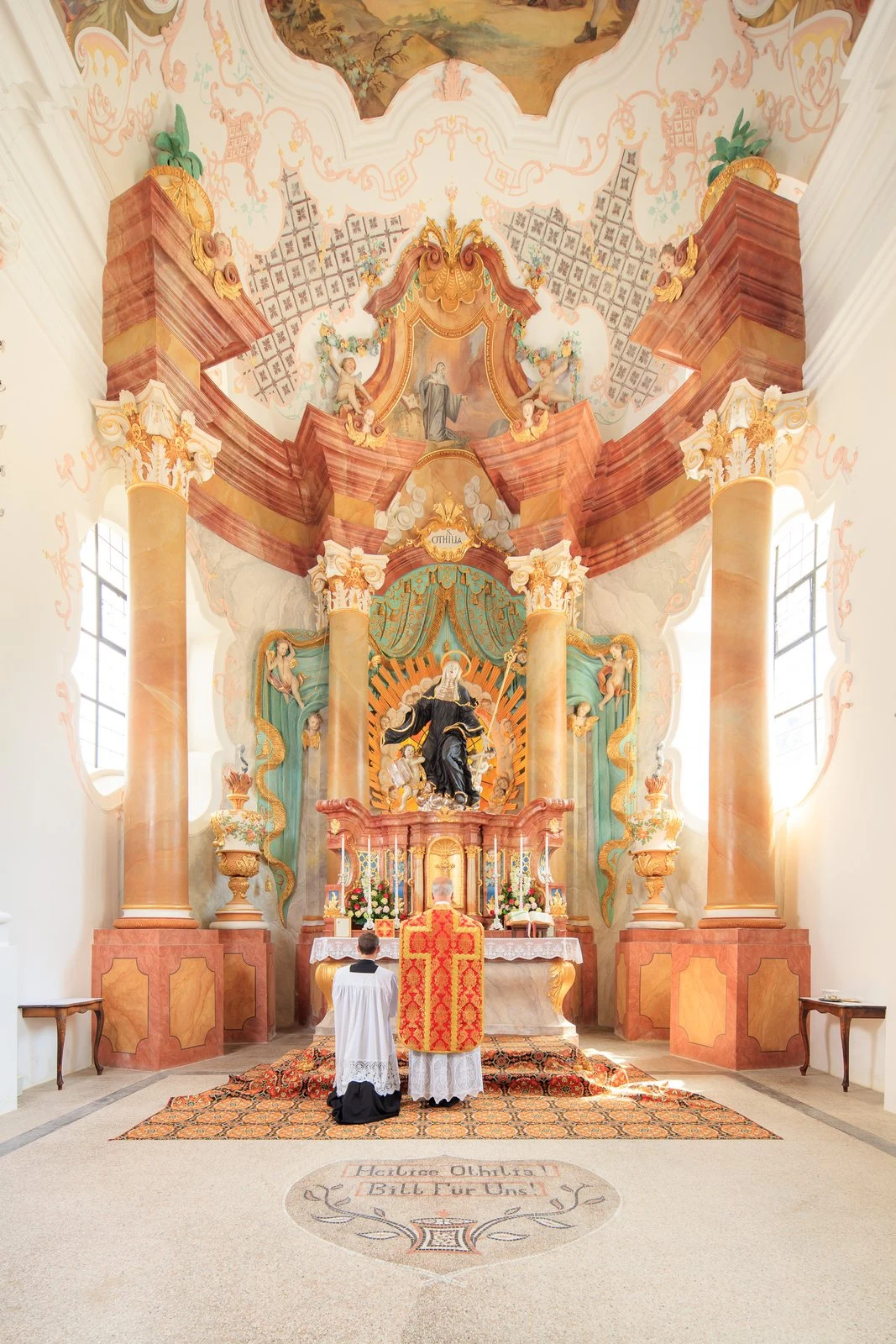
- At first it is enough simply to take in the liturgy, for the rite speaks for itself — you sense the deep unity between the faith and the liturgy of the Church.
-
 Listen
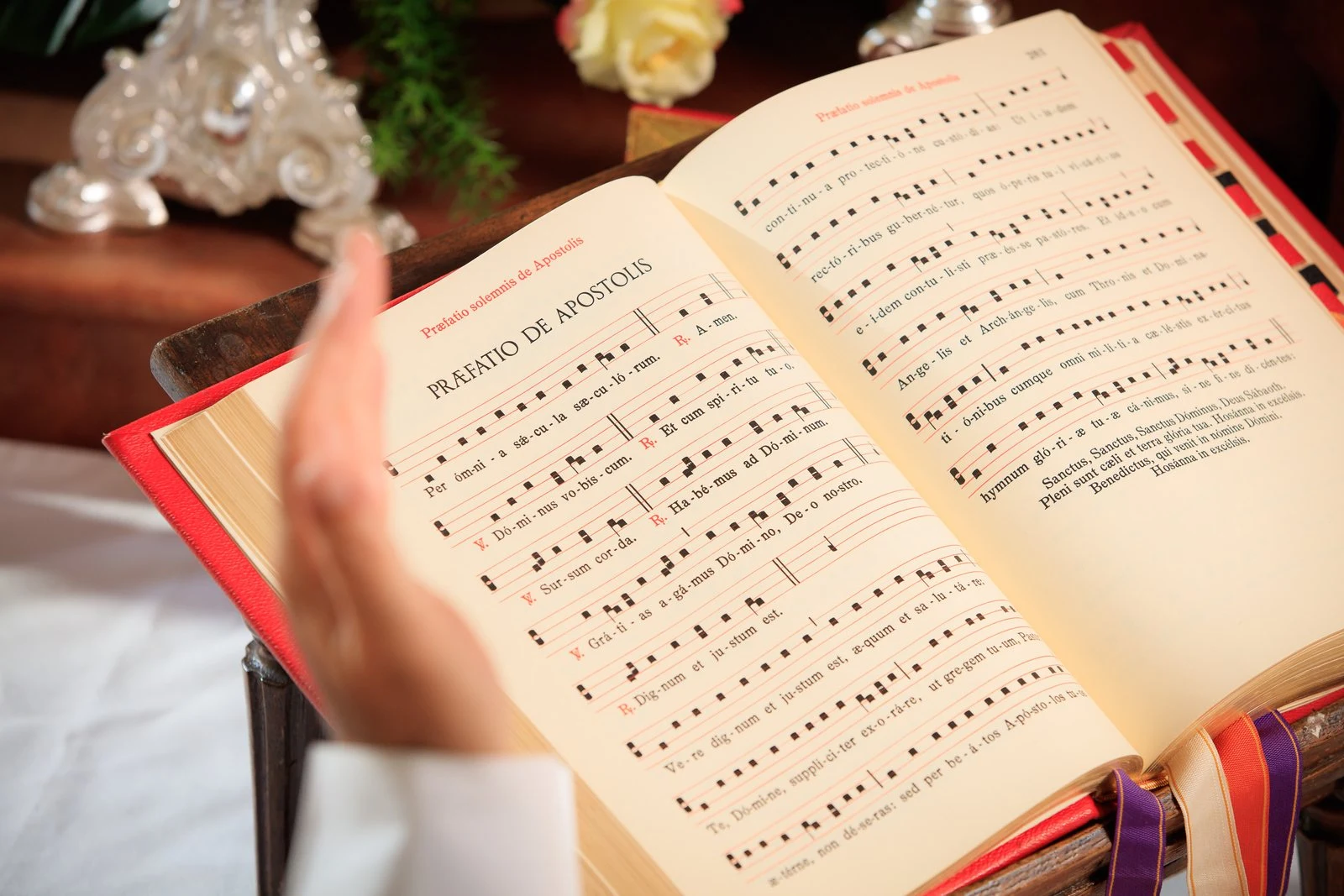
- In Gregorian chant the Catholic Church possesses a great treasure. Although many centuries old — Pope Gregory the Great (died 604) collected and ordered the melodies — it is alive to this day. It lifts us out of the everyday and is itself a “Sursum corda!” turned into melody. Anyone who would like to learn the chant, or even join the men’s or the women’s schola, is warmly welcome. Chant is not mere ornament, but an integral part of the traditional Roman liturgy.
-
 Read
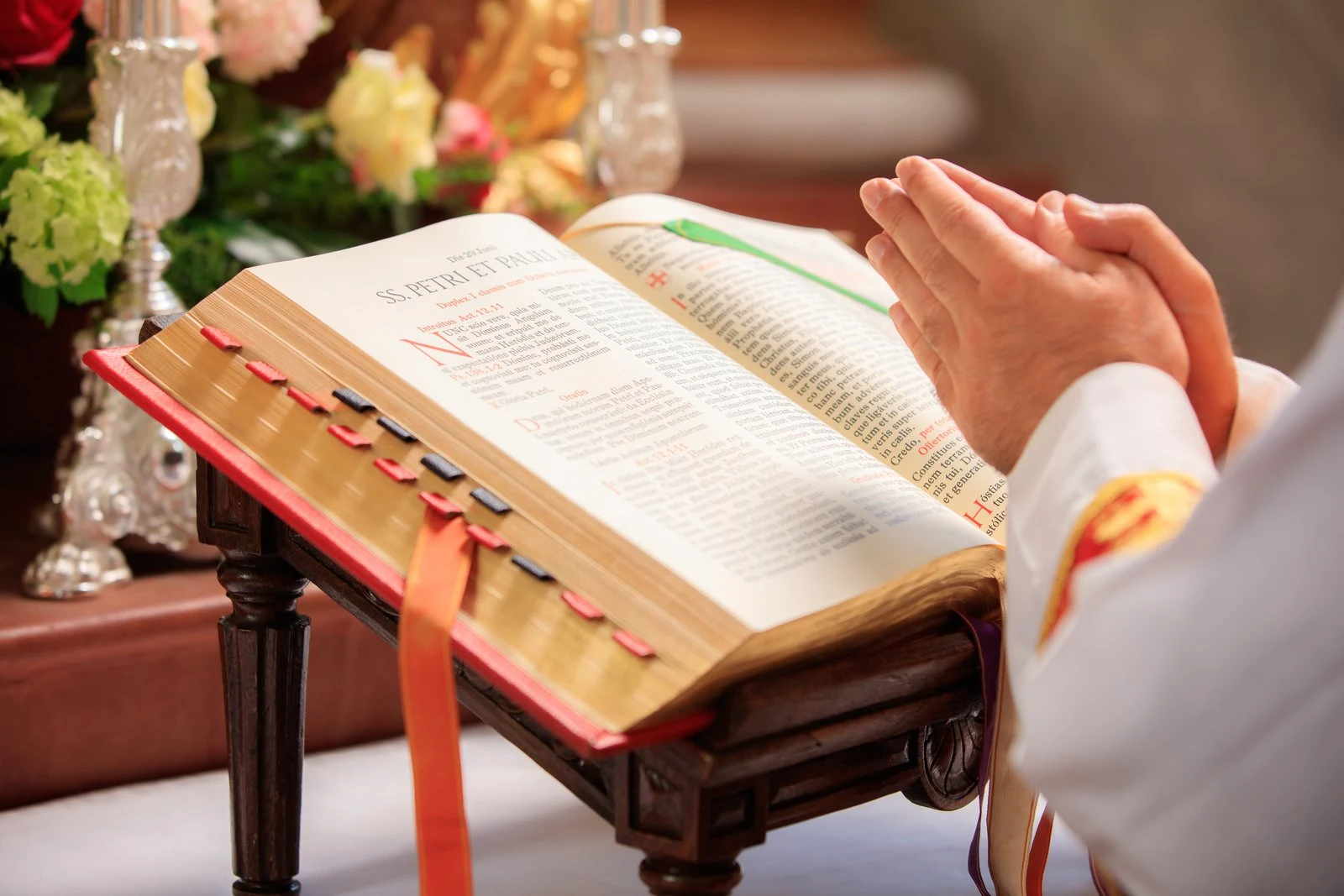
- We offer various booklets. Whoever becomes familiar with the order of Holy Mass, its prayers and their deeper spiritual meaning will soon feel at home in the traditional rite of Mass. To prepare, you will also find the complete Ordo Missæ — in Latin and German, with explanations — here on the website.
The Holy Mass
Structure
The path of the Mass
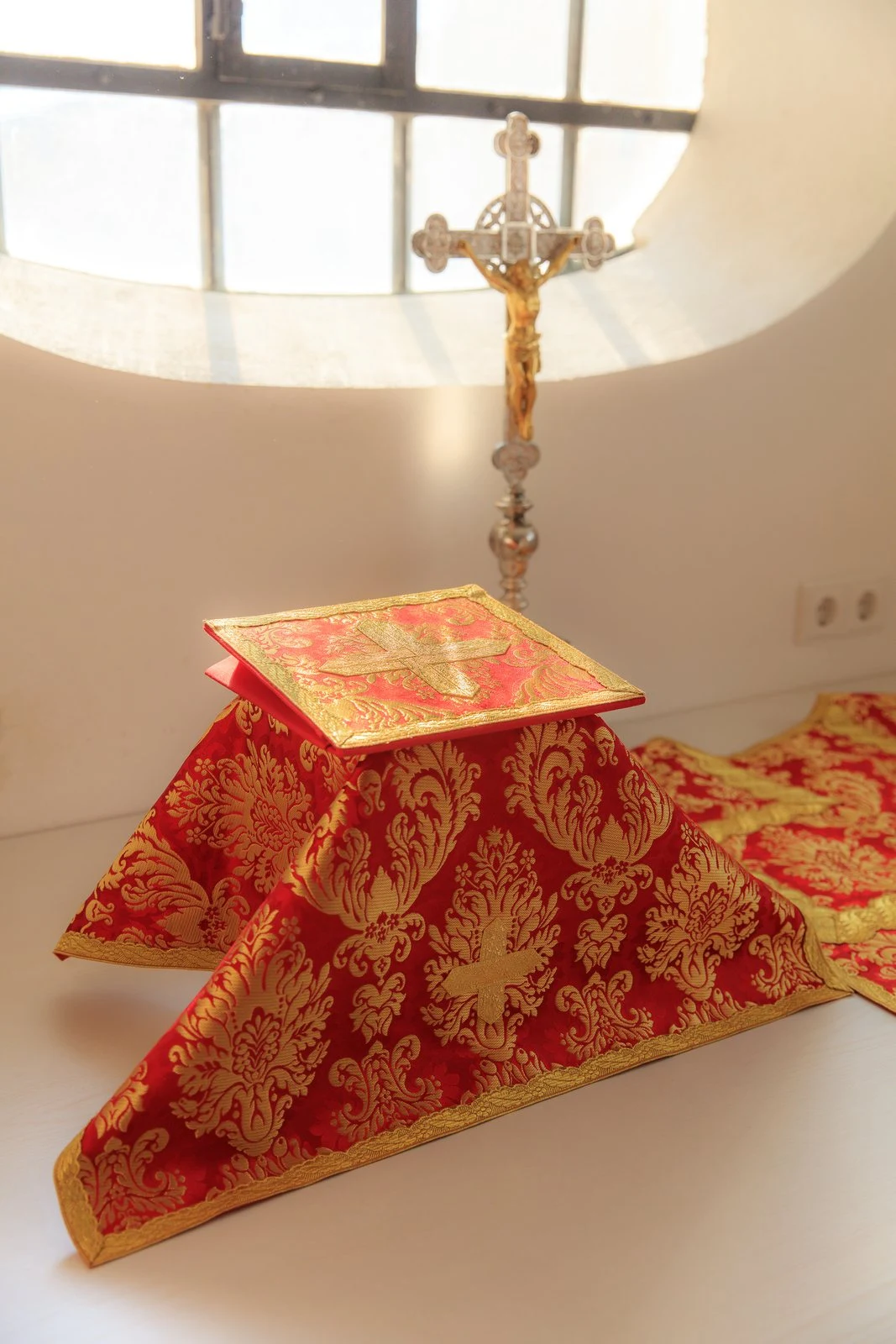
Holy Mass consists of three parts: the Mass of the Catechumens, the Mass of the Faithful and the Conclusion. The Mass of the Faithful is in turn divided into Offertory, Consecration and Communion. During the first and the last part the chalice is covered with a veil; only for the Mass of the Faithful does it stand uncovered on the altar.
Mass of the Catechumens
“Cleanse me, O Lord!”
Foot of altar & Introit Kyrie Gloria“Enlighten me, O Lord!”
Collect Epistle Gospel Sermon CredoMass of the Faithful
“Unite me with Thee, O Lord!”
Conclusion
Communion verse Postcommunion Dismissal & Blessing Last GospelChoose a step to see what happens at that moment.
Step 1 of 15
Foot of altar & Introit
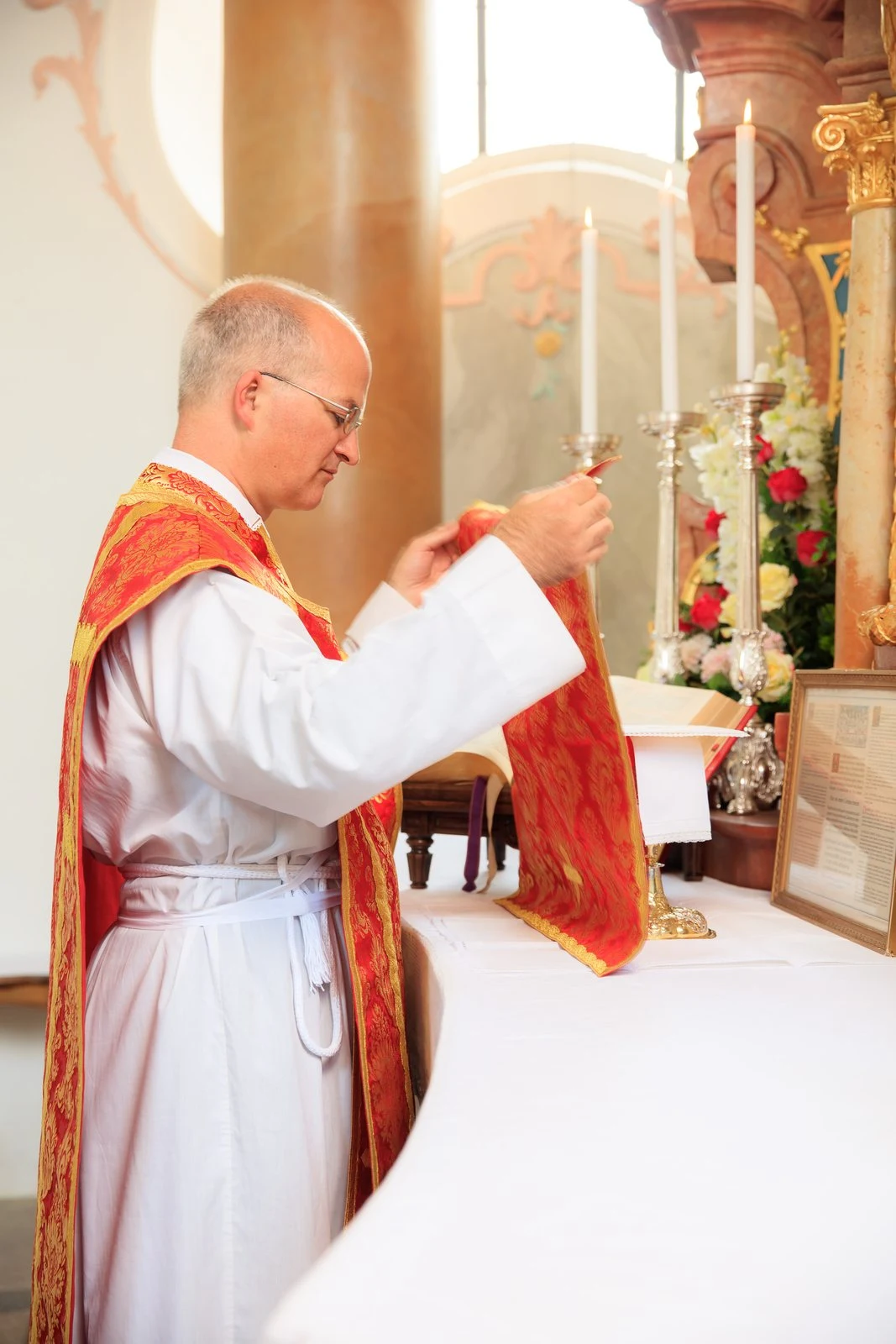
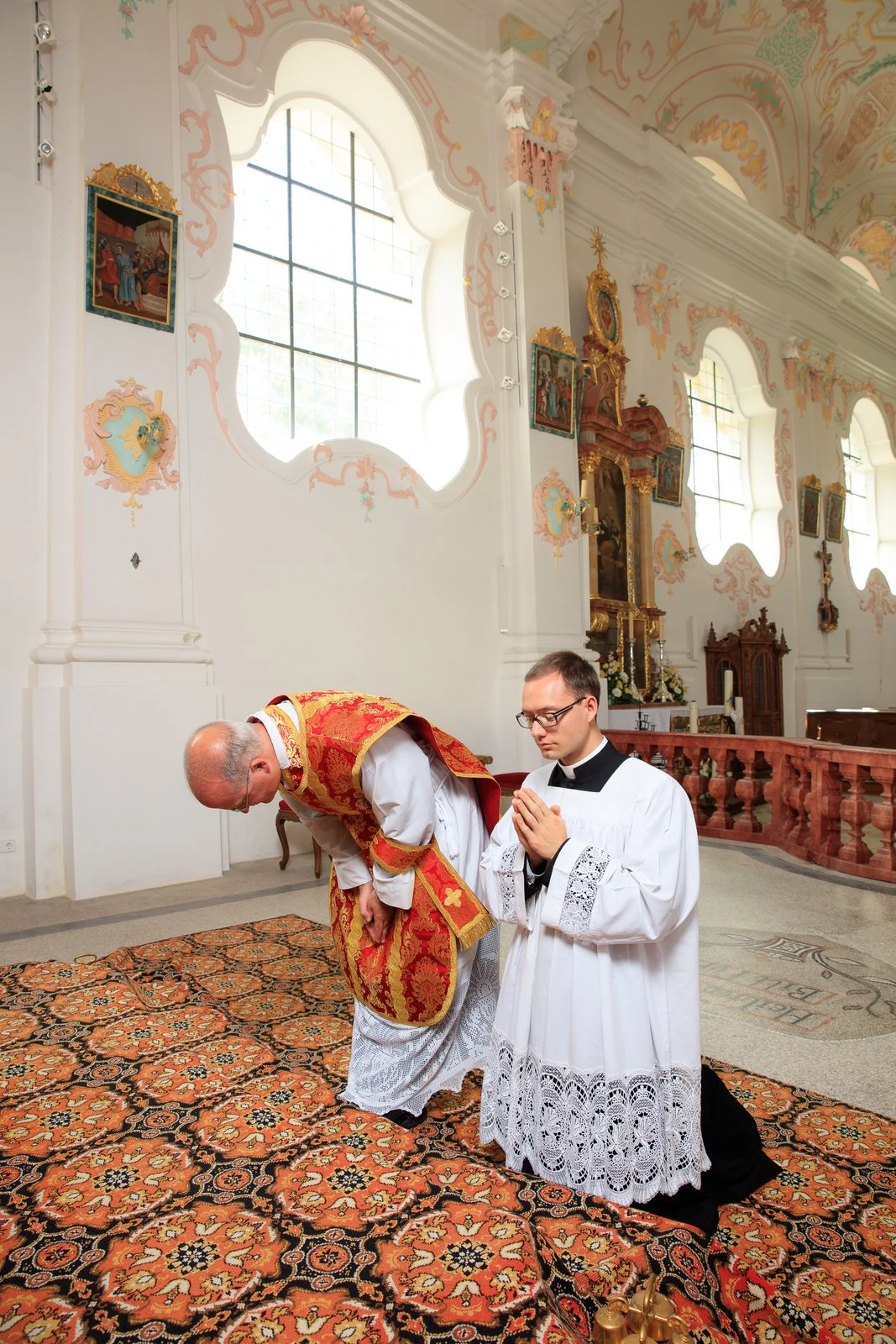
At the foot of the altar, priest and server pray Psalm 42 and the Confiteor in turn. Then the priest goes up to the altar and reads the Introit, the opening verse of the day.
The prayers in the Ordo Missæ (in German)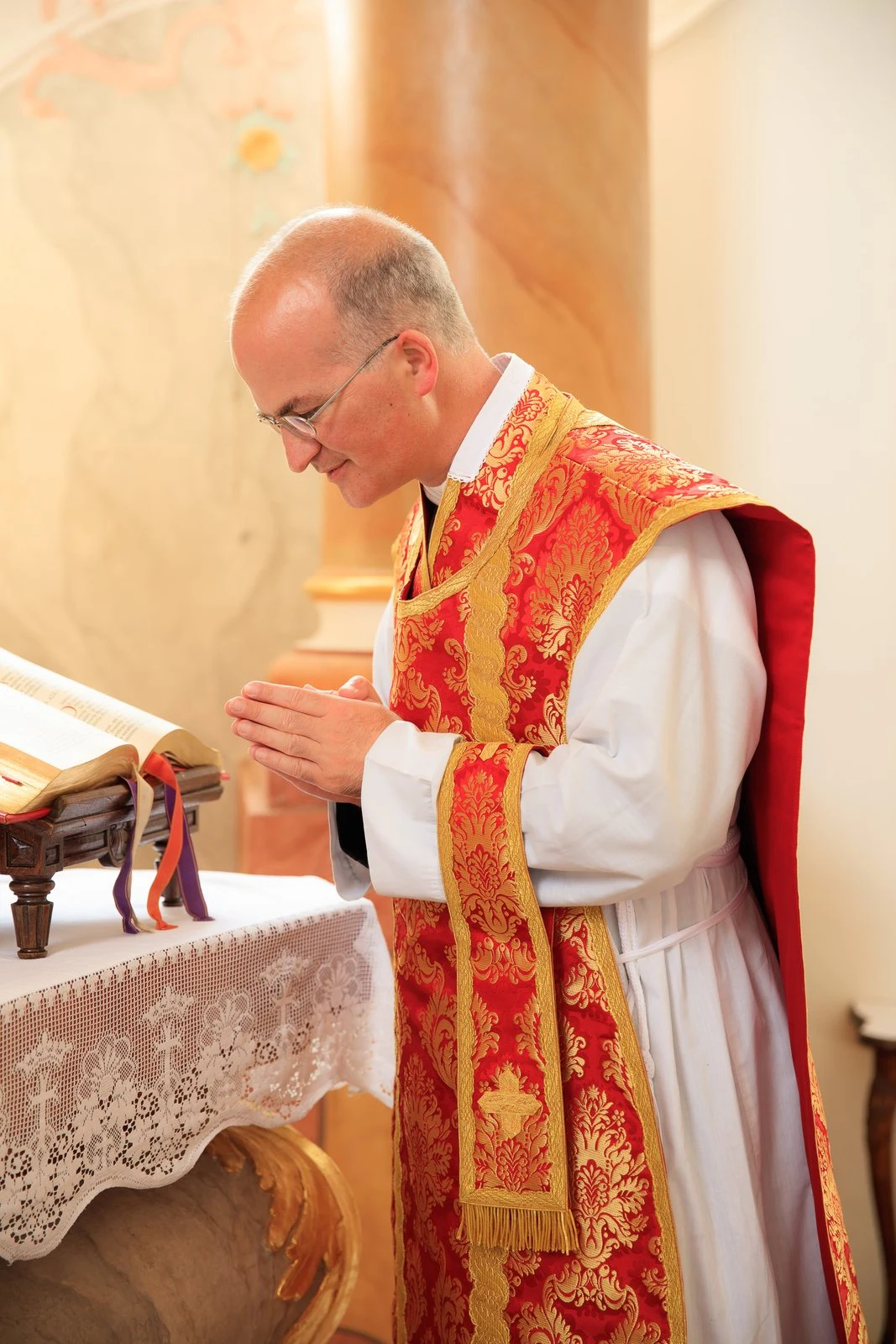
Step 2 of 15
Kyrie
Nine times the Church calls for mercy: three times Kyrie, three times Christe, three times Kyrie eleison.
The prayers in the Ordo Missæ (in German)Step 3 of 15
Gloria
Depending on the liturgical day, the priest intones, in the middle of the altar, the hymn of the angels.
The prayers in the Ordo Missæ (in German)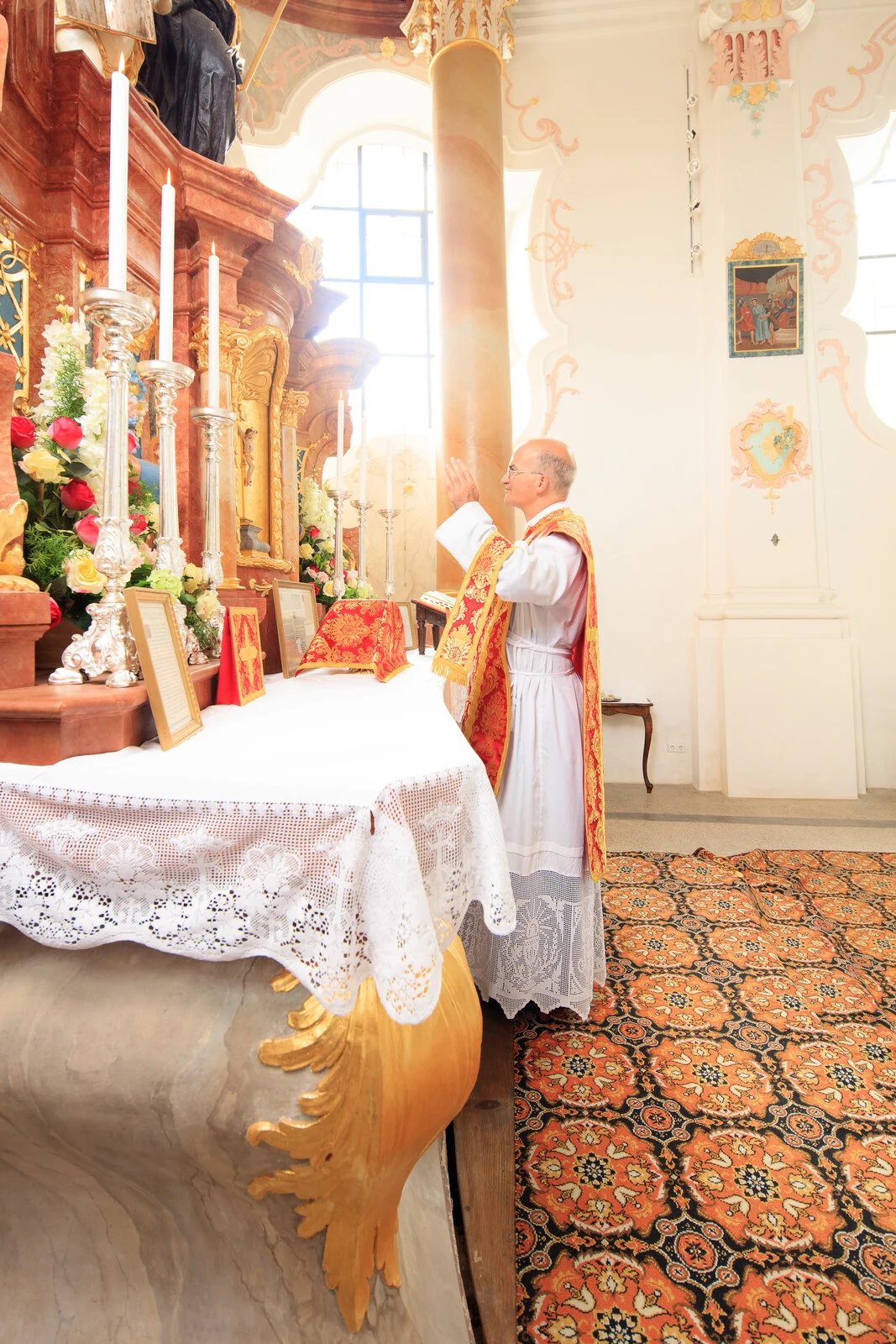
Step 4 of 15
Collect
With hands extended, the priest says the prayer of the day in the name of the Church.
The prayers in the Ordo Missæ (in German)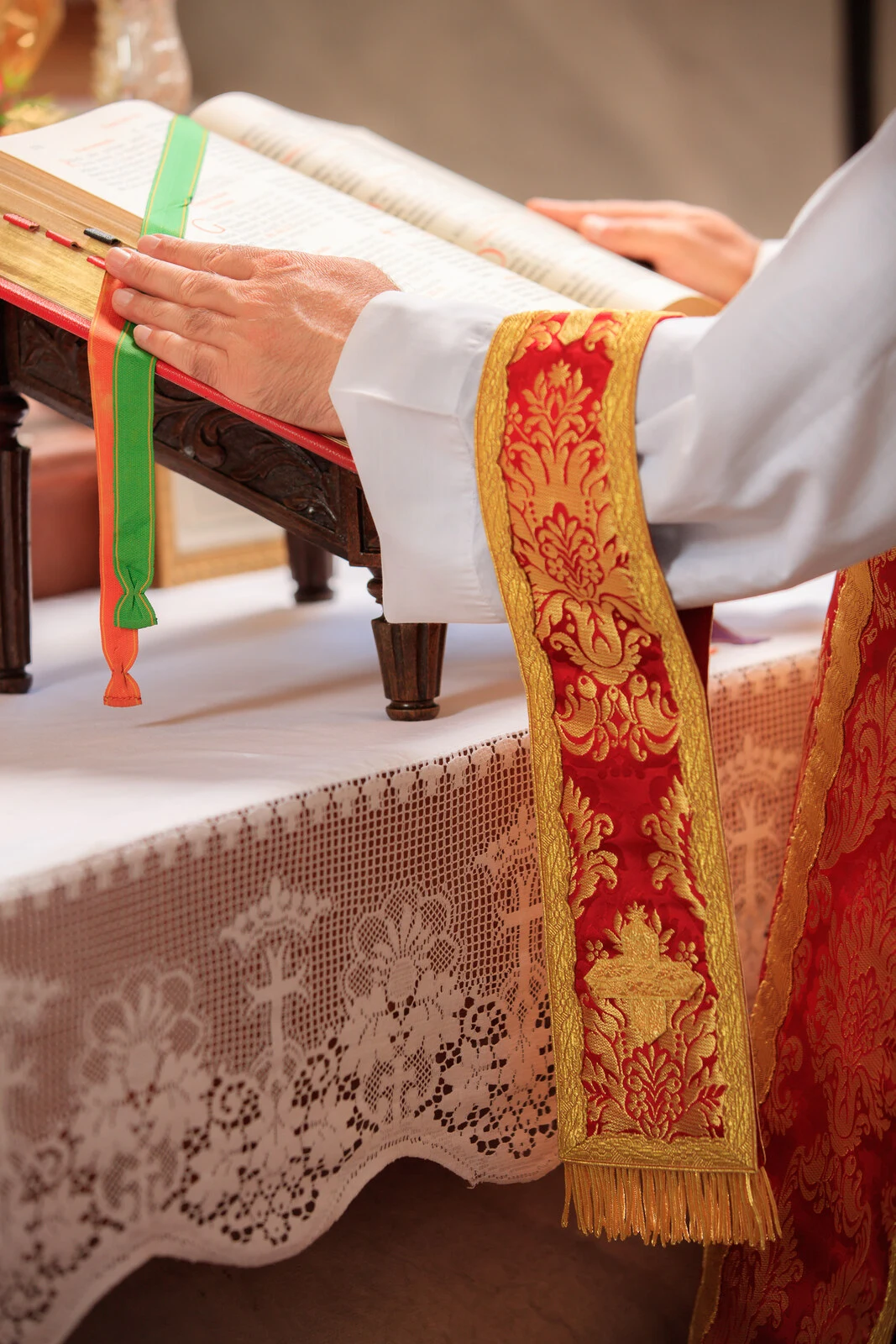
Step 5 of 15
Epistle
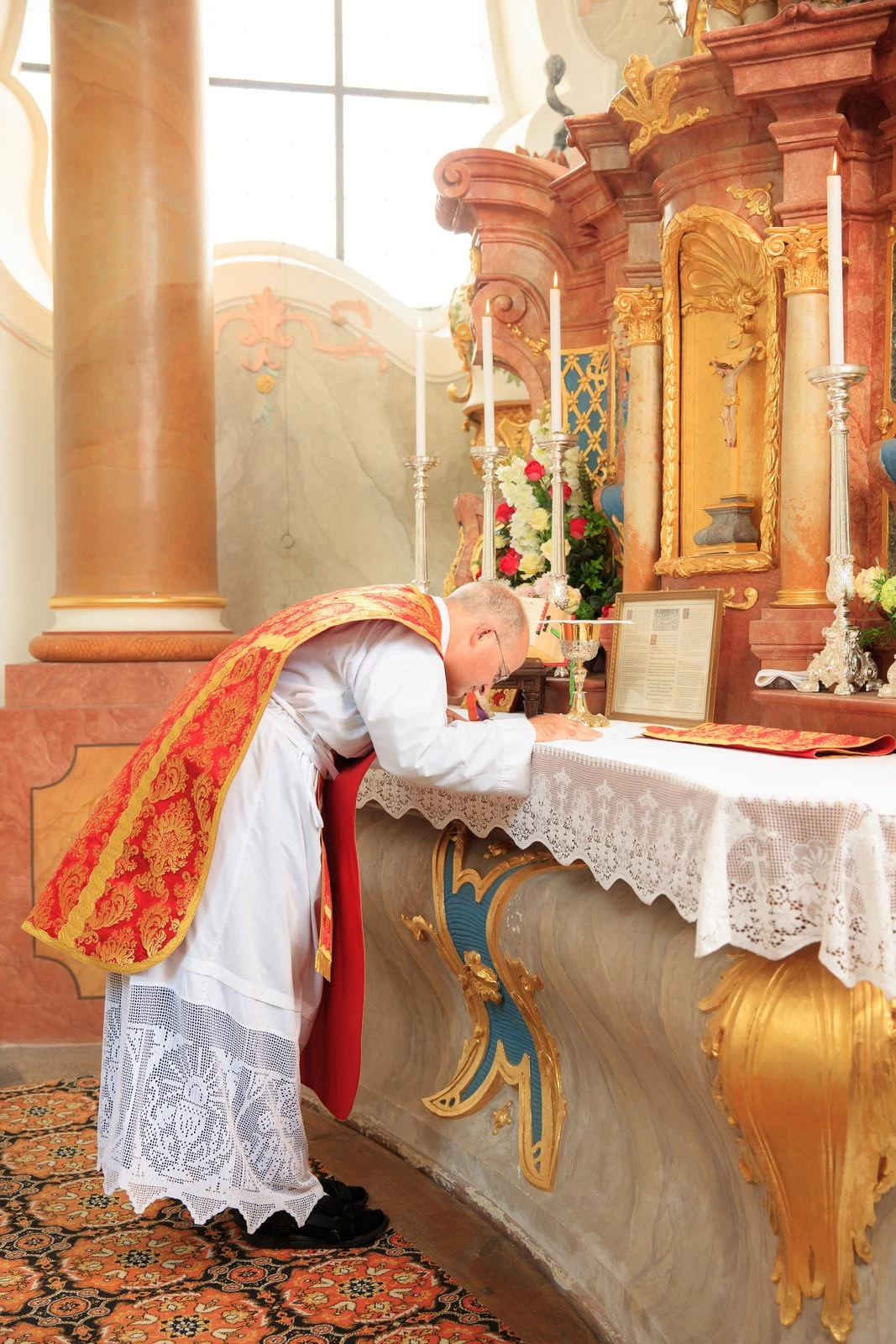
On the right-hand side of the altar the priest reads the Epistle, from the letters of the Apostles or the Old Testament.
The prayers in the Ordo Missæ (in German)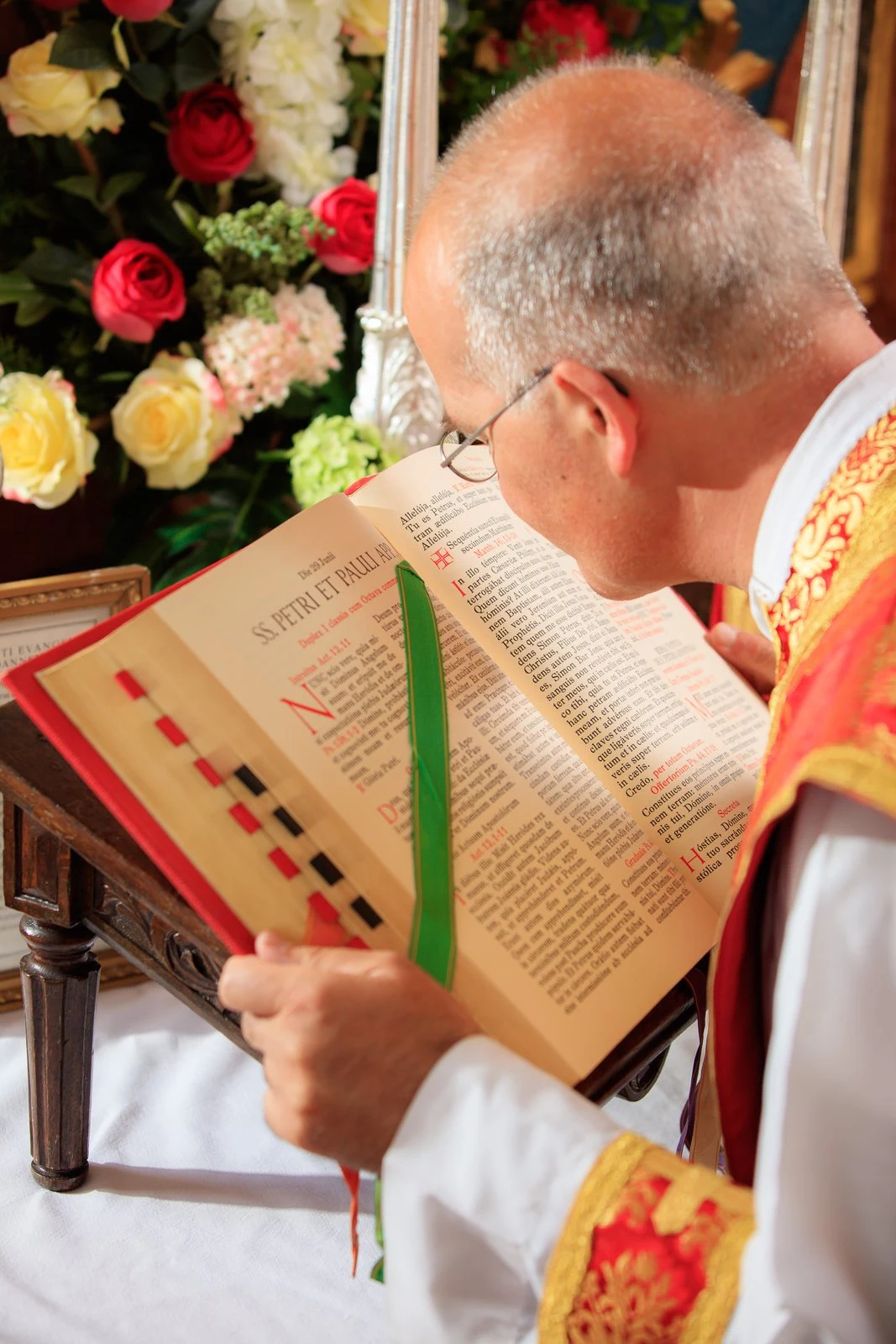
Step 6 of 15
Gospel
The missal is carried to the left-hand side, where the priest reads the Gospel. Everyone stands.
The prayers in the Ordo Missæ (in German)Step 7 of 15
Sermon
The priest explains the Word of God — in German.
The prayers in the Ordo Missæ (in German)Step 8 of 15
Credo
On Sundays and great feasts everyone professes the faith together. At “Et incarnatus est” everyone kneels.
The prayers in the Ordo Missæ (in German)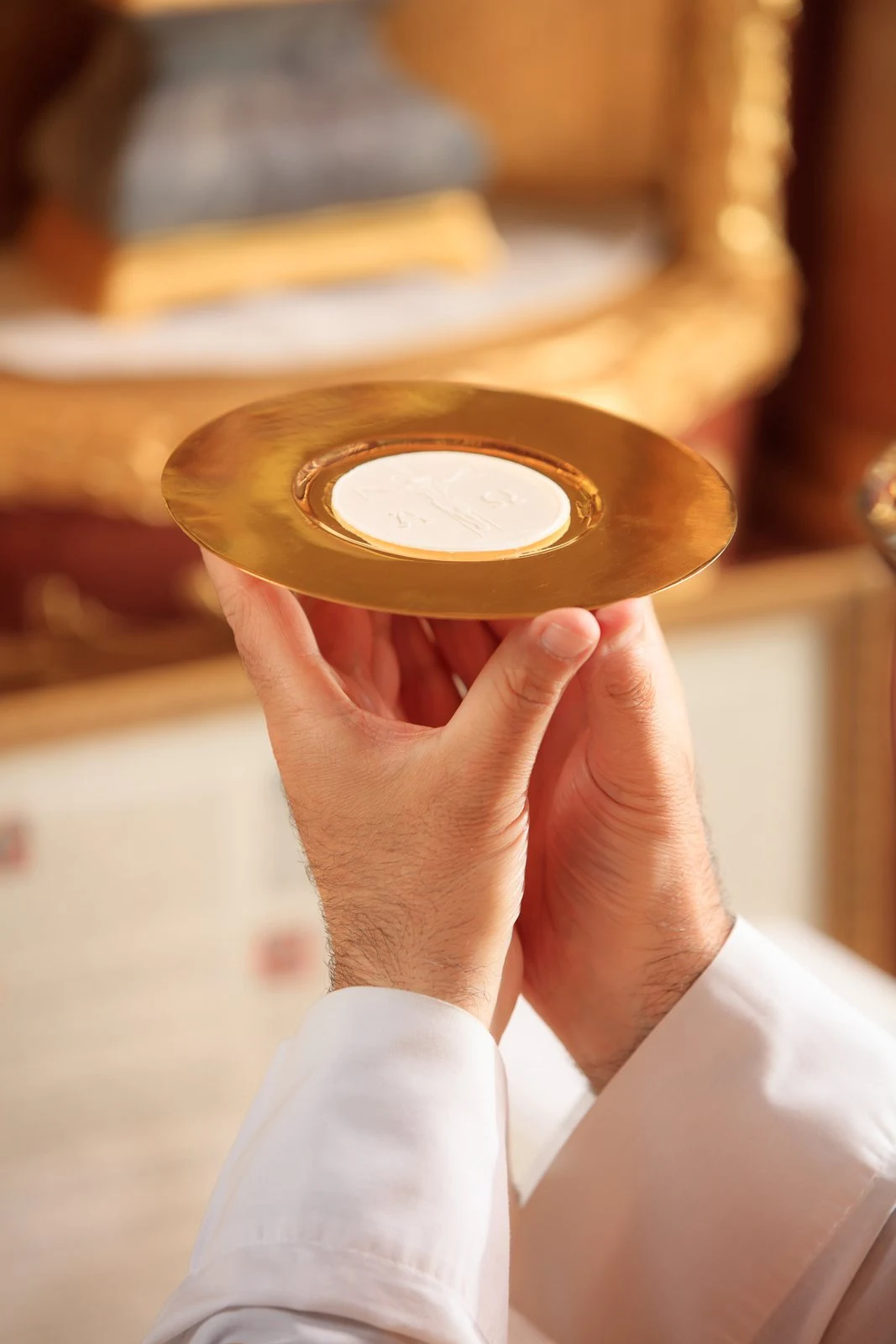
Step 9 of 15
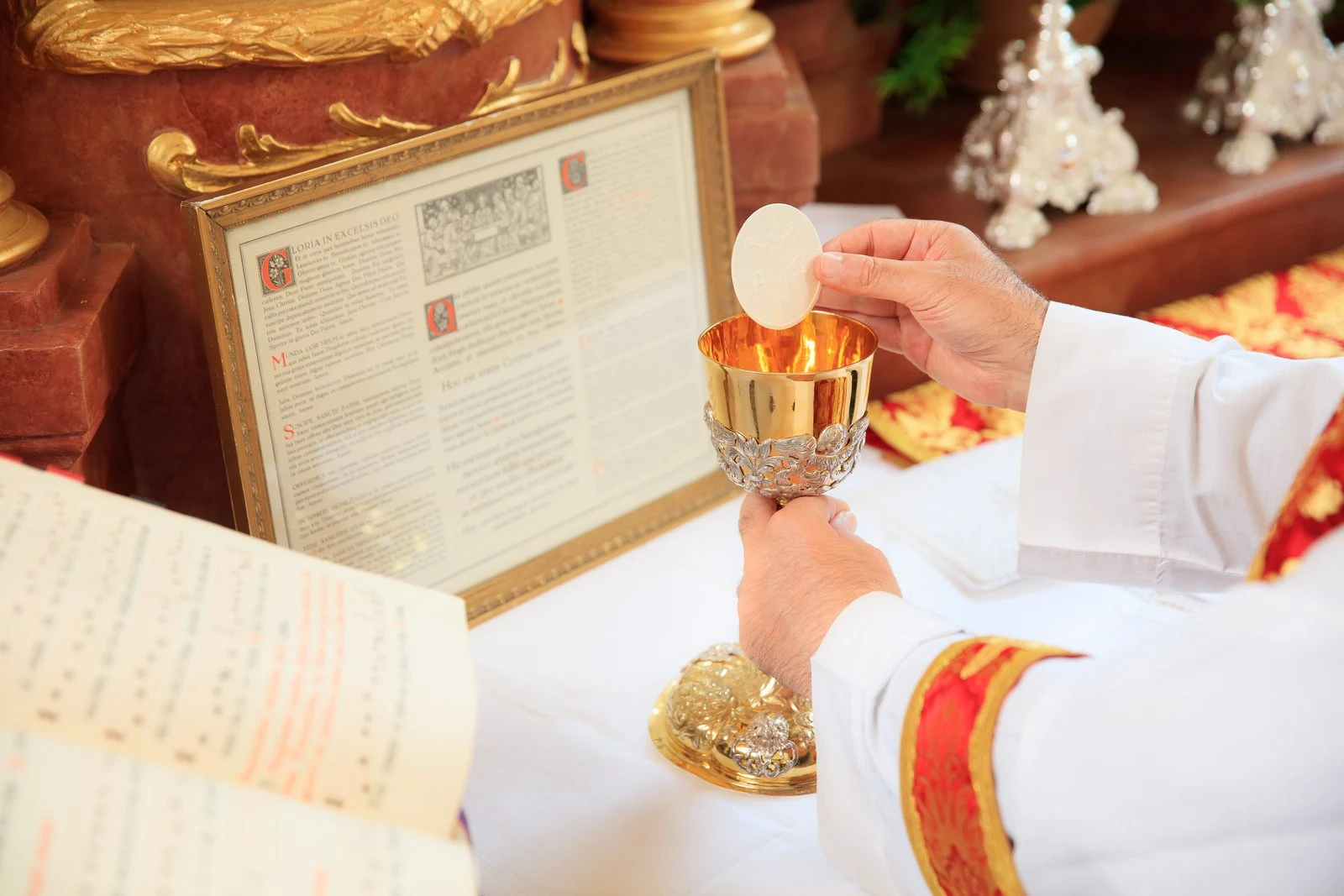
Offertory
The priest offers bread and wine: first the host on the paten, then the chalice with wine and a few drops of water.
The prayers in the Ordo Missæ (in German)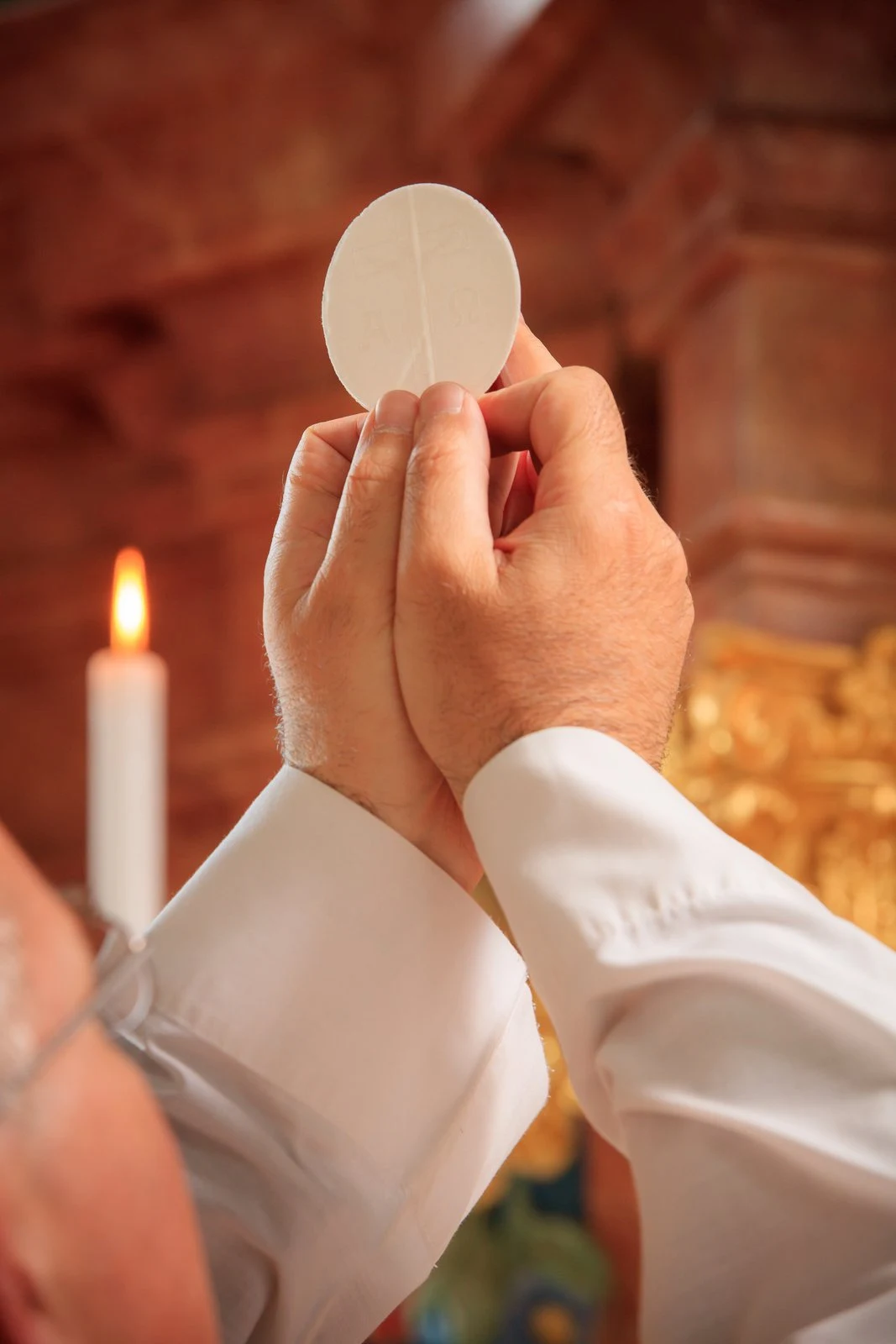
Step 10 of 15
Consecration
With the words of Christ, bread and wine are changed into His Body and Blood. The priest raises the Sacred Host and the chalice; the altar bells ring.
The prayers in the Ordo Missæ (in German)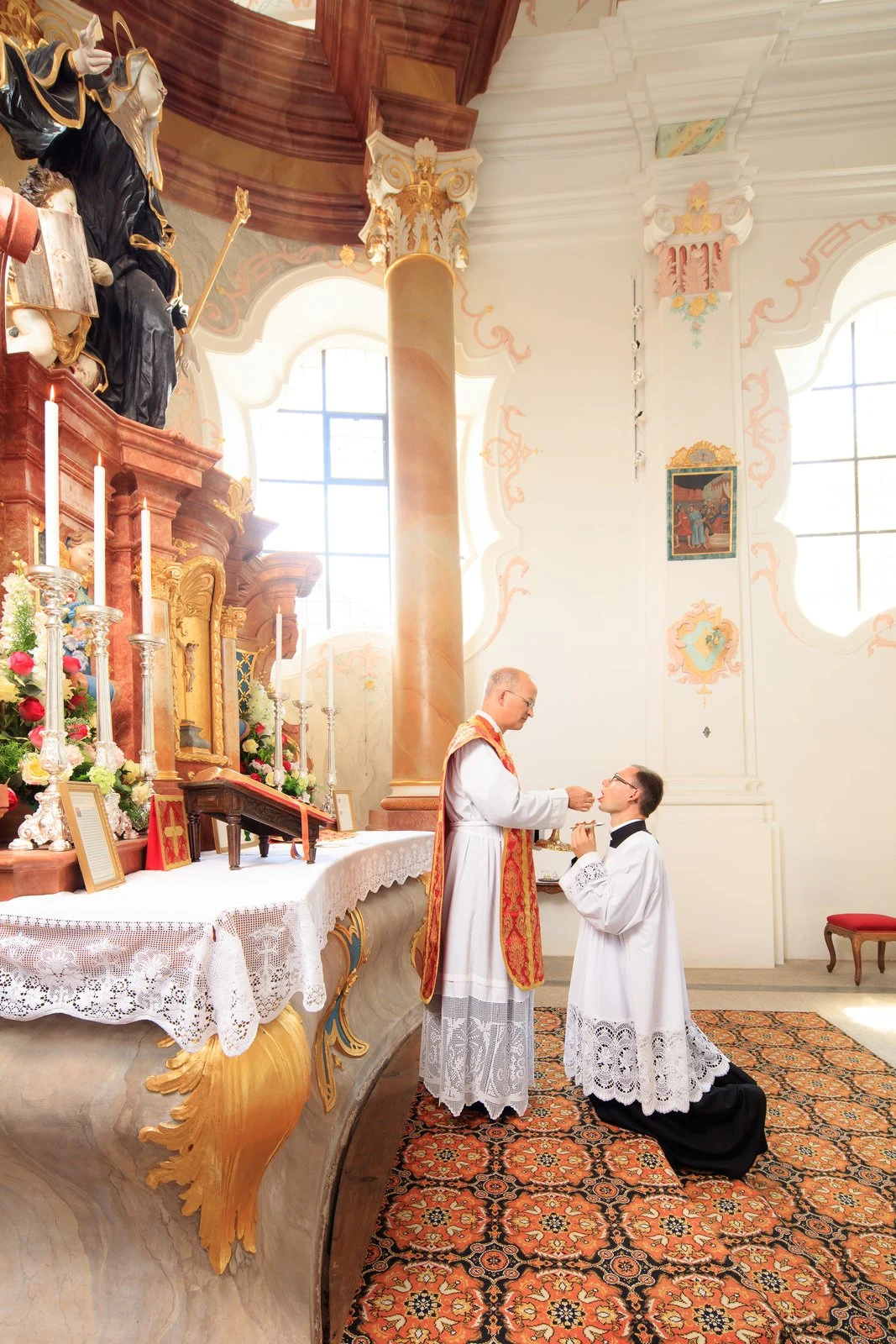
Step 11 of 15
Communion
After the priest, the faithful receive Holy Communion — kneeling at the altar rail and on the tongue.
The prayers in the Ordo Missæ (in German)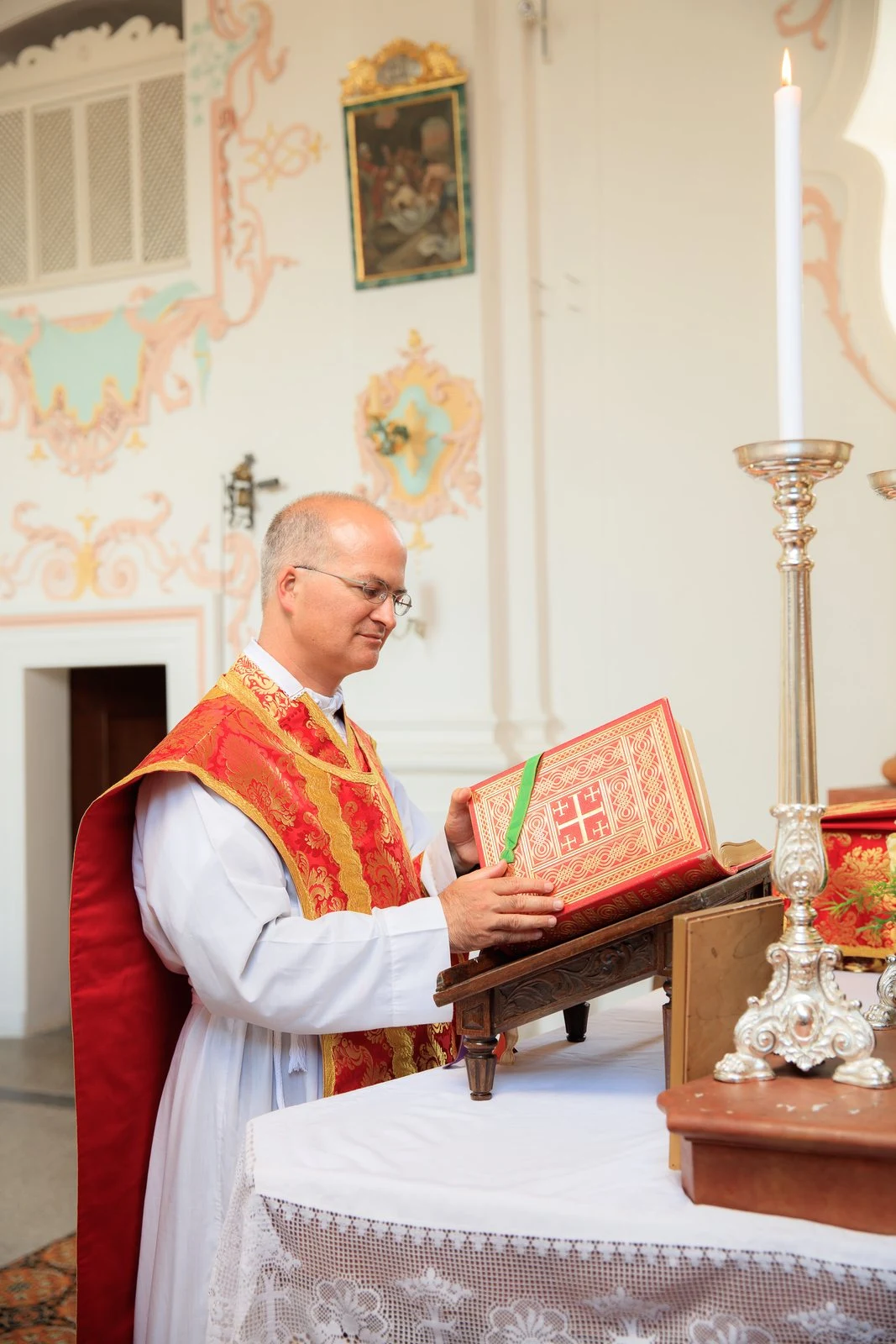
Step 12 of 15
Communion verse
On the right-hand side of the altar the priest reads the Communion verse of the day.
The prayers in the Ordo Missæ (in German)Step 13 of 15
Postcommunion
In the Postcommunion the Church gives thanks for the gifts received.
The prayers in the Ordo Missæ (in German)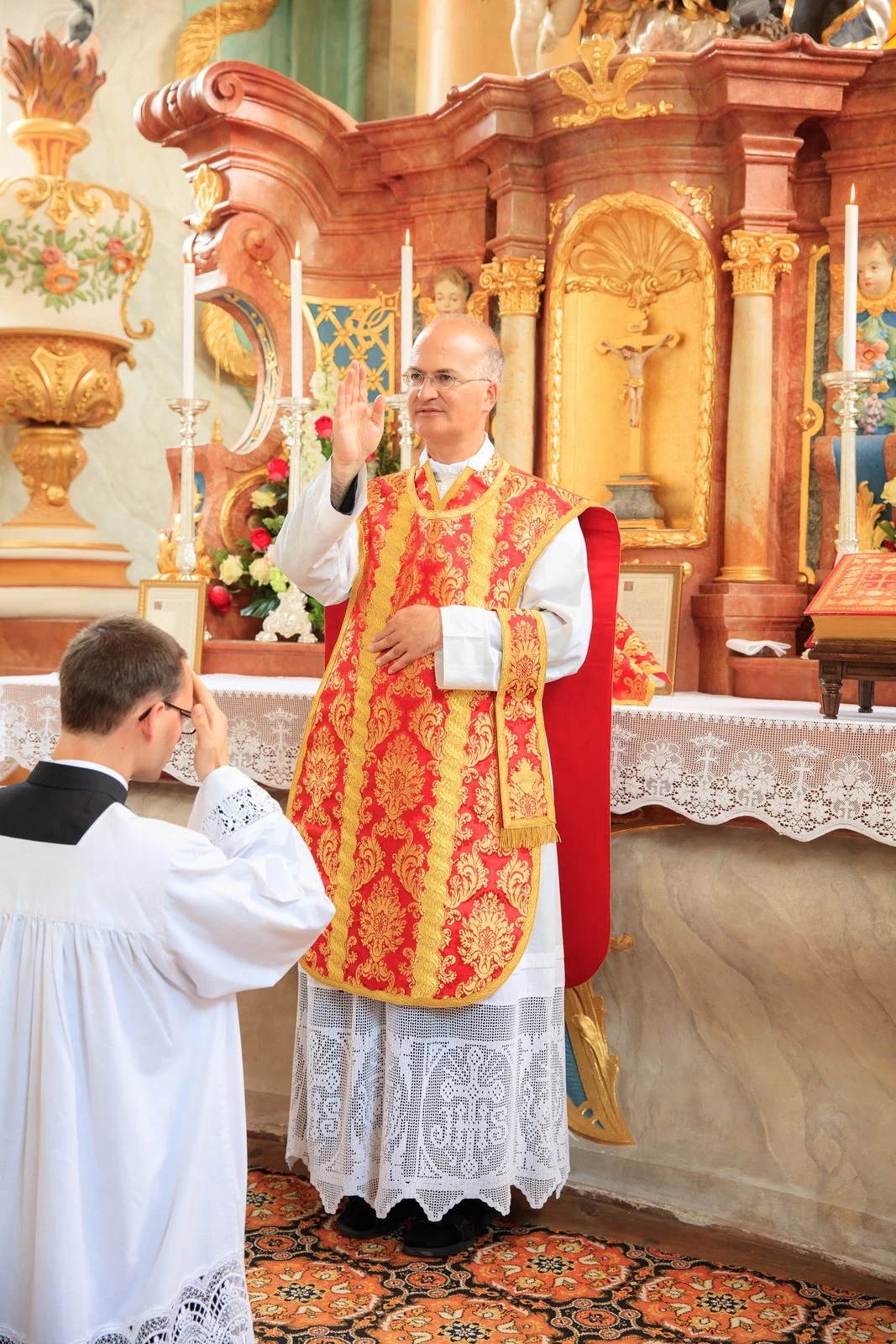
Step 14 of 15
Dismissal & Blessing
“Ite, missa est” — “Go, you are sent!” The priest blesses the faithful.
The prayers in the Ordo Missæ (in German)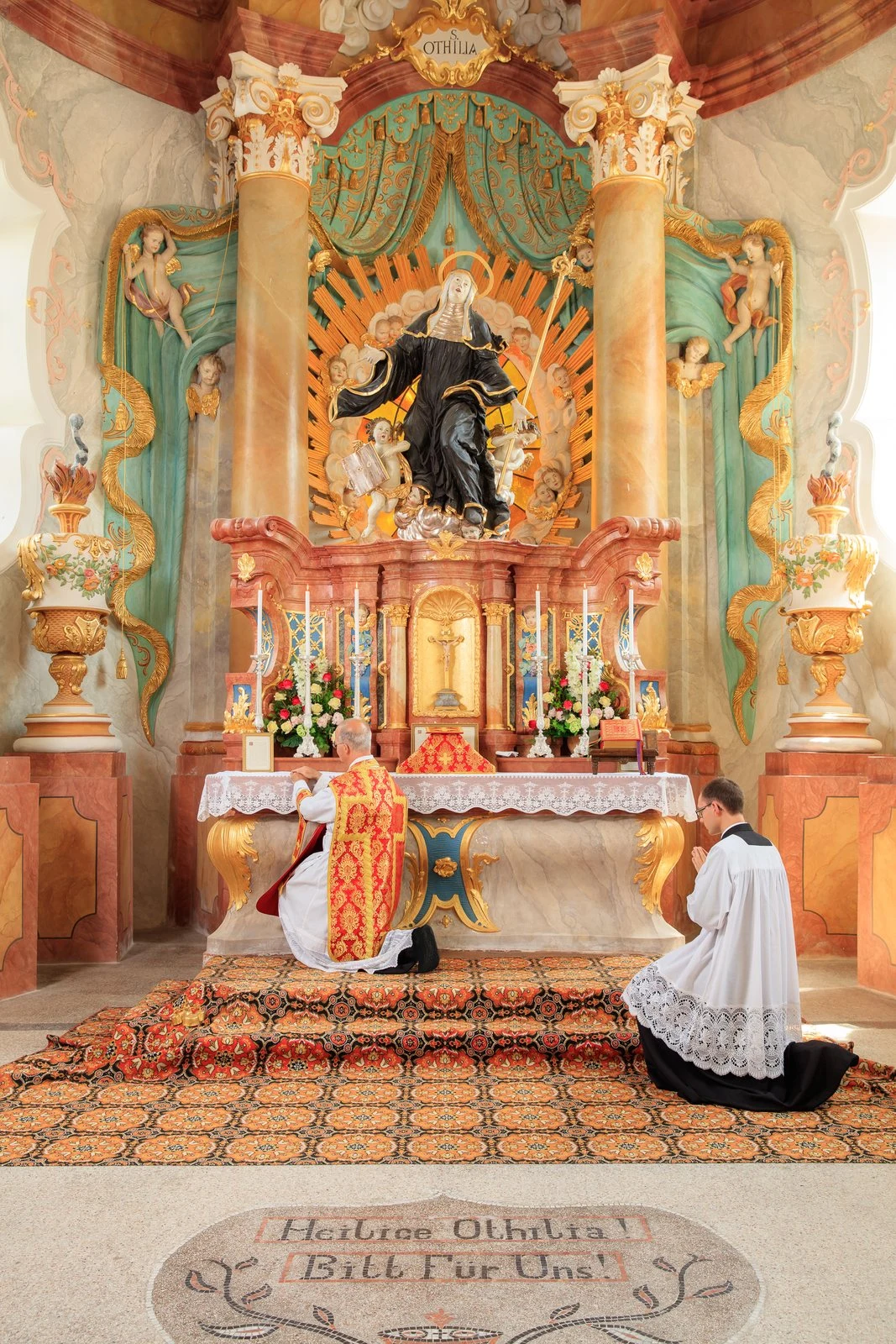
Step 15 of 15
Last Gospel
Finally the priest reads the beginning of the Gospel of St. John. At “Et Verbum caro factum est” everyone genuflects.
The prayers in the Ordo Missæ (in German)The Canon as an altar of steps
The Canon is the heart of the Mass of the Faithful — shown enlarged here. At its centre stands the Consecration. It is framed by the Preface and Sanctus before and by the Pater noster after.
The word “Canon” means “fixed order”. Its prayers are like the steps of an altar: they lead up to the Consecration and down again afterwards.
The whole order of Holy Mass — in Latin and German, with explanations.
Each step leads to its text in the Ordo Missæ (in German). After an idea from Entdecke die Messe.
Our publications
Books
-
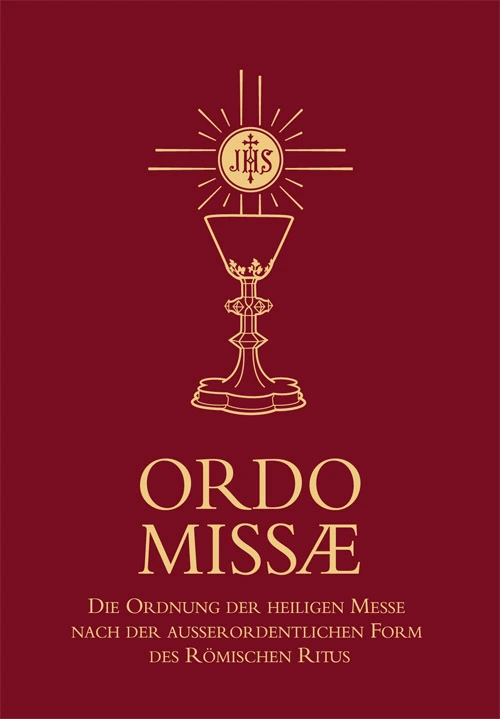
Ordo Missæ · Paperback
Contains all the parts of Holy Mass that always stay the same, in Latin and German, as well as a collection of Gregorian chants, treasured prayers and the German hymns we sing at our Masses in Zurich. Free of charge at the church entrances.
Read the order of Mass online (in German) -
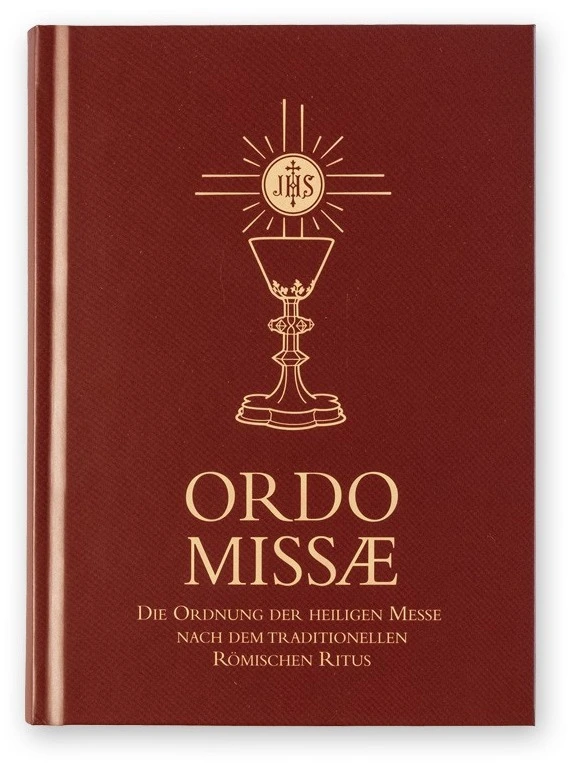
Ordo Missæ · Hardcover
The same texts in a large-format, hardbound edition, with ribbon markers and with the music for the hymns. A book for many years — we recommend it to everyone who comes to us regularly. Available from us.
-
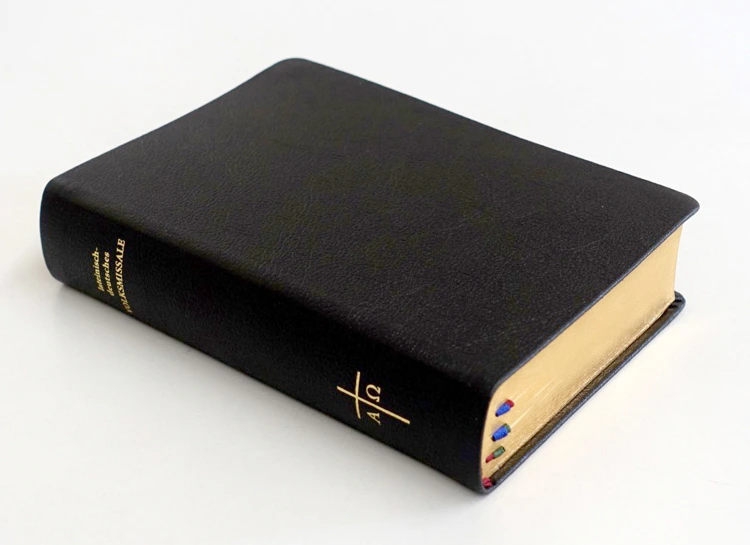
Volksmissale
A finely produced missal with all the texts of the Sunday Masses and saints’ feasts for the whole year, each in Latin and German.
-
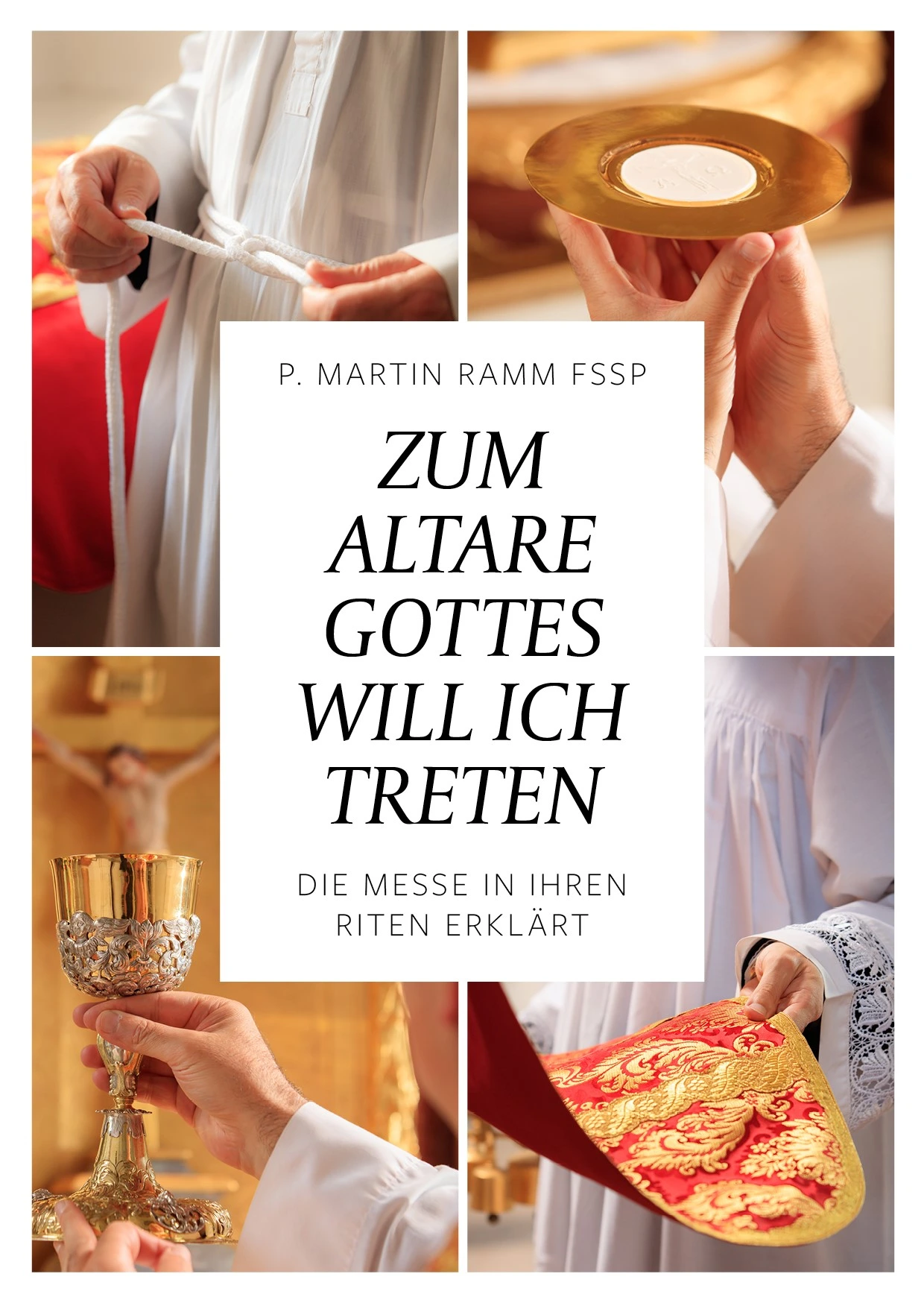
Zum Altare Gottes will ich treten
A little book that explains the meaning of each rite step by step, in simple language.
-
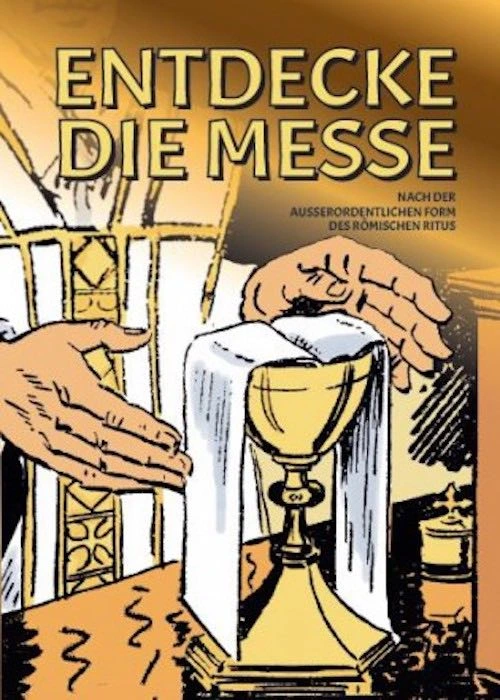
Entdecke die Messe
A catechetical comic with depth that brings the liturgy vividly to life. It was first published in English as Know Your Mass.
Know Your Mass (English original) -
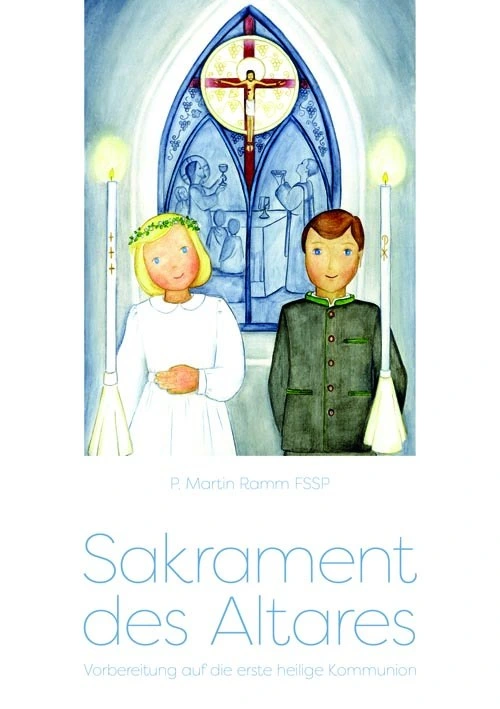
Sakrament des Altares
For children preparing for their First Holy Communion, with many illustrations.
These books are in German; the comic is also available in English. Feel free to ask us about them!